
You are currently browsing the category archive for the ‘Think About It’ category.

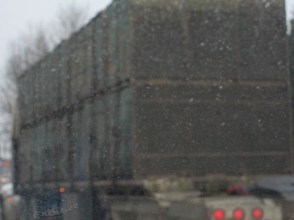
My commute to work shares the path of “chicken trucks” en route to the Draper Valley Farms slaughterhouse. (The sanitized name is “Processing Plant.”) Depending on the time I go into work, I may see a truck carrying live birds to their deaths about once a week. Occasionally, I see live birds in the morning, and then a truck carrying dead birds in the evening…

12/13/11…Today at 8:30 AM I saw the ‘chicken truck’ driving north carrying live birds to this “processing plant.” At 6:00 PM tonight, I saw a “Draper Valley Farms” truck driving south carrying the refrigerated body parts of those same birds. What I want to know is this…
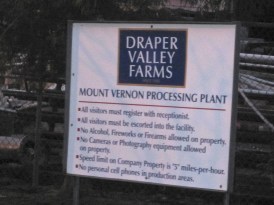 At what time did those beings experience the first pains of “processing?” At what time were the frightened birds grabbed– by the fistful– by men unloading their metal cages? When were they hung upside down on hooks? When did the first one experience broken bones? At what time did they realize they would die? At what time did they hit the electrified bath? When did the first bird miss the automatic throat-slitting machine & go to the scalder alive? At what time did the ‘backup slaughterer’ start his shift? When were the birds’ heads pulled off? Feet & feathers removed? Eviscerated? When did the feces start to spray all over? When did the carcasses commune in the refrigerated water? When were these birds chopped up and packaged in cellophane?
AND…At what time will the delivery truck driver unload the neat little blood-free packages at the back door of the grocery store? At what time will the stocker arrange the stacks of flesh? When will the first customer come to pick through the piles of breasts, thighs or legs? At what time will the grocery patron complain that chicken is just getting too “expensive?”
AND…When will that same grocery patron make the connection that IN these packages were birds who were exploited, abused, hurt and killed for NO good reason. WHEN?? When will he go vegan? When will she go vegan? God, I hope it’s soon.

Chickens killed unnecessarily on 12/26/11…

Chickens killed unnecessarily on 12/27/11…


Chickens killed unnecessarily on January 4, 2012…
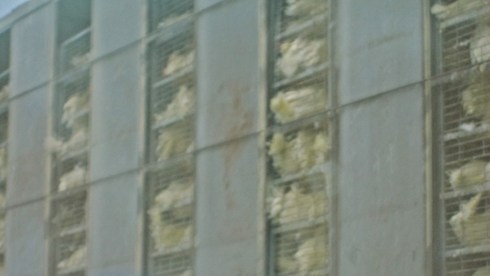

PLEASE…GO VEGAN.
For more about these birds, please read Chicken Dinners
Monday, May 14, 2012
Today I was rollerblading on a paved trail near my house. The side of the path had been freshly mowed. There, I saw about 5 dead baby possums who must have been killed by the mower. There was no blood, and the bodies were intact. I think they were crushed.
Seeing them made me think about all the animals killed during the production of food crops: field mice, moles, rabbits and others, who unknowingly get in the way of the farm machinery.
Some people like to use the fact that “animals die in the harvesting of plants” as an argument to discredit a vegan’s decision to leave animals off her plate. I respond: Should I go back to eating animals because I can’t help the small mammals who meet their untimely deaths out in the farm fields?
If I can’t help it that a bird got killed by my car while driving, does it mean that I should go back to eating chickens? No. I don’t want to kill either bird: not a sparrow by accident or a chicken on purpose. I want to cause as little harm as humanly possible.
Animals who are killed for food don’t just magically grow big and plump without eating. Animals who are intentionally killed are fed plants first. The two main “animal feed” crops in animal agriculture are corn and soybeans. A high percentage are genetically modified and heavily sprayed with pesticides.
Animals eat plants and then people eat the animals. More animal death is caused by eating animals than by simply eating plants directly. Eat organic, non-GMO plants whenever possible.
What about “grass-fed” animals, you ask? The fact is, grass-fed livestock are rarely 100% grass-fed. Pastured livestock are raised on grassy pastures, but their diet is supplemented with grains, especially in colder climates. Pastured cows, bison, pigs, turkeys and chickens are typically at least partially grain-fed even when they’re called “free-range,” “organic,” “heirloom,” and “heritage.”
In addition, numerous animals– wild horses, badgers, black bears, bobcats, mountain lions, coyotes, foxes, wolves, opossum, raccoons, skunks, beavers, nutrias, porcupines, prairie dogs, black birds, cattle egrets, and starlings– are killed for the purpose of “protecting” ranchers’ interests (i.e. their livestock, their livelihood.)
The USDA Animal and Plant Health Inspection Service (APHIS) Wildlife Services (WS) has been tasked to “help people resolve wildlife damage to a wide variety of resources.” (In this case, “resources” means cattle. The cattle are physically protected up until the time they are slaughtered.) Wildlife Services (WS) uses the following methods of “resolution”: poisoning, trapping, snaring, denning (denning = pouring kerosene into a den, setting fire to it, and burning young animals alive), shooting, and aerial gunning.
Back to my point.
Yes, even in the “best case scenario,” a certain percentage of animals will be killed through not so pain-free methods: Animals are hit by cars, bugs get squashed, critters are unfortunate victims of combine harvesters and lawnmowers, and animals are routinely consumed by other animals.
I highly doubt that people routinely go into grocery stores thinking– while picking up pork chops– “Well I couldn’t save that possum from being killed by the mower, so I might as well be the reason this pig had to die.”
That’s not how it works. People typically select animal products because 1) animal products taste good, 2) people are accustomed to buying animal products, and 3) people believe that animal products are essential to a healthy diet.
I think that some people who use the “animals die in the harvesting of plants” line of reasoning are simply looking for an reason to continue consuming animals.
Bottom line: it all comes down to daily choices. We can either choose to consume animals that we know for a fact were killed, or we can try our best to avoid unnecessary death.
When shopping for food, we can all choose fruits, vegetables, beans/legumes, nuts, seeds, grains, herbs and spices. We can strive to choose whole, organic, non-GMO foods. We can avoid animal products– including, but not limited to– chickens, pigs, cows, fishes, eggs, milk and cheese.



 Freeheel Vegan