
You are currently browsing the tag archive for the ‘baby’ tag.
Milk a bean, milk a grain, milk a nut, milk a seed, milk a drupe (yes, a drupe!), but please don’t milk an animal. When people consume milk from lactating animals, the first thing you should ponder is what is baby cow– baby goat– baby sheep– drinking? What happens to the baby animals? What happens to momma cow– momma goat– momma sheep when her overworked reproductive system stops being “profitable”? The bad news is that the answers aren’t pretty.
The good news is that non-dairy milk options are plentiful. It’s easier than you might think to wean off animal milk. There is no nutritional need for animal milk in the human diet!
Go to the non-dairy milk section of your local store and you’ll notice an ever-increasing array of plant milks: Soy milk, rice milk, oat milk, almond milk, hazelnut milk, hemp milk, coconut milk..even flax milk! There are different brands of each type of milk. There are different varieties within the types of plant milks..like plain, vanilla, chocolate, unsweetened, fortified. If you don’t like one, try another. Find your favorite!
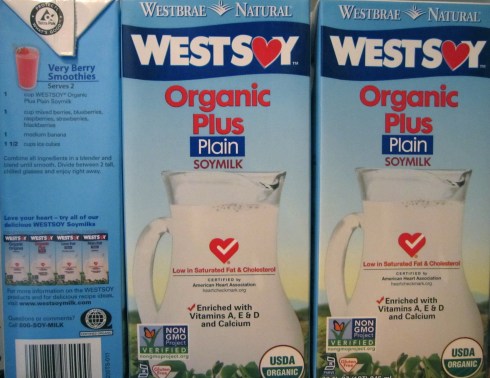
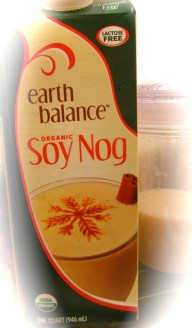
Holiday flavors (YUM!) – Pumpkin Spice, Chocolate Peppermint, Nog


Make your “own” milk: it’s easy to do and you needn’t endure a long pregnancy and painful delivery. It’s also less expensive than packaged milk and more eco-friendly. Personally, I don’t like the aftertaste of packaged almond milks but I love homemade almond milk. I encourage you to make your own nut and rice milks. Here’s how I do it…
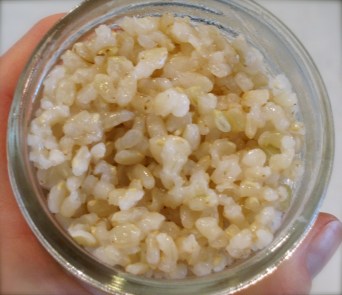
First, make sure you have a batch of cooked short grain brown rice on hand. I make up a batch and freeze portions in 1/2 cup glass jam jars. One cup (dried) rice will make enough for 7 batches of milk.
You must use short grain rice! You don’t want your milk to have a gritty sediment, do you? What’s the difference between long and short grains? The answer is in the percentage of the starches amylose and amylopectin. (I first learned about them from chef Alton Brown…thanks, A.B.!)
Long grain rice has a higher percentage of amylose. Amylose makes the rice cook up dry, firm and separate. Amylose is insoluble in water. Rice milk made from long grains has more of a “gritty” sediment. The resulting milk is more watery, less creamy = not good!
Short grain rice has a higher percentage of amylopectin. It releases starch when cooking, resulting in a moist, soft and sticky grain. The resulting milk will be creamy without a gritty sediment = good!
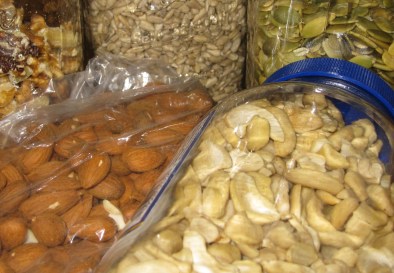
On to the nuts…pick your favorite raw nut. I like to use Brazil nuts, but sometimes I mix it up and use cashews, almonds, or hazelnuts.
Nut Rice Milk (my own creation):
Soak 1/3 cup raw nuts and 2 pitted dates into 4 cups water for 4-8 hours. Blend the water, nuts and dates with 1/2 cup cooked short grain rice and 1 teaspoon vanilla extract in a VitaMix blender or other “sporty” blender. (I don’t know if it would work with a wimpy blender!) Frothy, healthy, affordable and delicious! I don’t strain my milk. I simply shake, then pour.
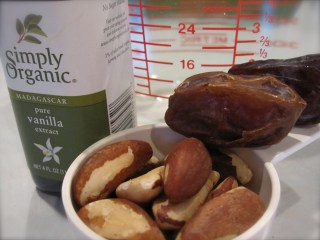


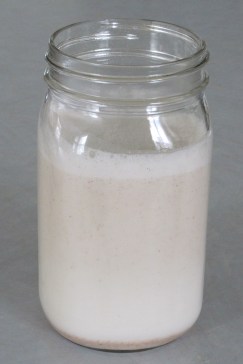
My personal favorite is mixing my homemade nut rice milk with packaged soy milk in a 50-50 ratio. That’s just me! You do what you gotta do…as long as you leave the animals alone!



 Freeheel Vegan
Pigs Got Milk?
August 3, 2012 in MeatCast Commentaries | Tags: animals, Availability and Cost of Feed Ingredients, baby, Biology 101, breed, consume, cows, dairy products, dead, diet, economic, flesh, human, indoctrination, infant, insanity, Joel DeRouchery, Kansas State University, kill, lactation, lactose, Mackenzie Dierks, milk, milk replacer, milk sugar, nature, nursery pig, nutrient, pigs, podcast, Pork Checkoff, Porkpod, pregnancy, societal, speciesist, spray dried whey, starter pig diet, weaning, whey | 3 comments
Mackenzie Dierks, from Pork Checkoff:
“One of the things you touched on was a lactose source, such as whey, and its importance, and also the challenges it can create as a part of the nursery pig diet. Can you expand on that?”
Joel DeRouchery, from Kansas State University:
“Lactose is a very common nutrient that we look at to formulate into starter pig diets. Lactose is the milk sugar, so pigs really like the taste. It’s highly digestible in that transition period from the sow on into weaning. So it’s very typical we have some sort of lactose source from weaning, up until the pigs are about 25 pounds.”
“One thing that’s happened over this last portion of this year is that the lactose price has greatly increased. In fact, spray-dried whey is priced around 75 cents per pound. And if we go back historical, 4 years ago, it was 24 cents per pound.”
Reference: 7/23/12 PorkPod podcast “Availability and Cost of Feed Ingredients” (6:27)
//////////////////////////////////////////////////////////////////////////////
Well…
It seems that everyone’s getting dairy products except infant cows.
And, it seems that baby animals of various kinds are denied their own milk from their mothers.
Let’s back up a second and review Biology 101…
Cow + Pregnancy = Baby Cow
Cow Lactation = Food for Baby Cow
Pig + Pregnancy = Baby Pig
Pig Lactation = Food for Baby Pig
Human + Pregnancy = Baby Human
Human Lactation = Food for Baby Human
That’s what nature intended.
Now, a step-by-step sequence describing how humans have screwed with nature:
and…
It’s time to stop disrespecting nature.
Live vegan and let’s stop the insanity!
Share this: