
You are currently browsing the tag archive for the ‘seed’ tag.
My thumb is not green…Which means that if I can grow sprouts, anyone can. It’s ridiculously easy and highly gratifying! Sprouts are the only food that I (currently) have the time or motivation to grow myself.
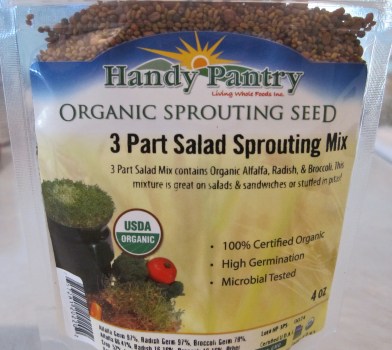
STEP 1: Buy seeds. Here is a nice blend of organic alfalfa, radish and broccoli sprout seeds. My local natural food Co-op has a whole section with seeds and sprouting supplies.
STEP 2: Get a quart wide-mouth canning jar and sprouting lid. A sprouting lid has holes in it to allow air flow and drainage. I made my own using some plastic mesh that I found at the craft store. Just make sure that the holes are small enough so that the seeds don’t go through.
STEP 3: (DAY 1) Soak 1 tablespoon sprouts in the quart jar filled with cool water for 4-8 hours. Drain through the sprout lid.
STEP 4: (DAYS 2-5) At least 2 times per day, rinse the seeds and growing sprouts by filling up the jar with cool water so it overflows. Turn upside down to drain. Keep out of direct light. Don’t let the seeds dry out.
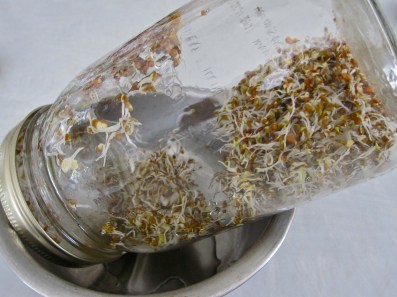
Day 3 – Draining the Sprouts
STEP 5: After the sprouts start to grow, place the jar in a location that gets indirect sunlight. This develops the chlorophyll.
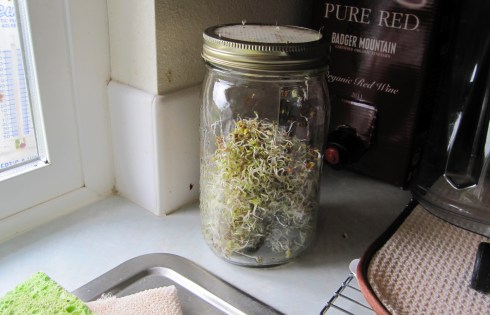
Day 4 – Exposing the Sprouts to Indirect Sunlight
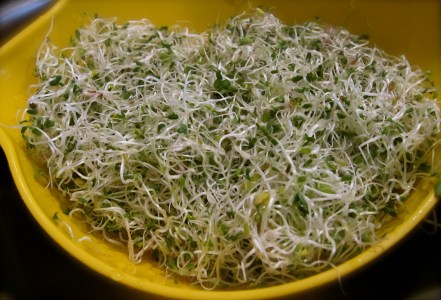
STEP 6: (Day 5-6) When the jar is filled up with green sprouts you’re ready to harvest!

Day 5 – Harvest Day
Place the sprouts in a large bowl filled with cool water. Break up the sprout “clump” and swish around to loosen the seed hulls. Most will float to the top, and the rest will sink to the bottom. Carefully pour the hulls down the drain while keeping the sprouts from following!

STEP 7: Drain the sprouts and store in a closed container in the refrigerator. I put a damp paper towel in the bottom of the container to keep the sprouts moist but not too wet. Eat within a week.
My favorite summer sandwich is a “green sandwich,” made with sprouts, cucumber, green pepper and avocado, with dilled horseradish sauce (Vegenaise + Bubbies Horseradish + dill). Sometimes I add some marinated tofu slices.
For a great resource and more information, consult The Sprouting Book, by Ann Wigmore.

HAVE FUN AND BE WELL! 🙂
Milk a bean, milk a grain, milk a nut, milk a seed, milk a drupe (yes, a drupe!), but please don’t milk an animal. When people consume milk from lactating animals, the first thing you should ponder is what is baby cow– baby goat– baby sheep– drinking? What happens to the baby animals? What happens to momma cow– momma goat– momma sheep when her overworked reproductive system stops being “profitable”? The bad news is that the answers aren’t pretty.
The good news is that non-dairy milk options are plentiful. It’s easier than you might think to wean off animal milk. There is no nutritional need for animal milk in the human diet!
Go to the non-dairy milk section of your local store and you’ll notice an ever-increasing array of plant milks: Soy milk, rice milk, oat milk, almond milk, hazelnut milk, hemp milk, coconut milk..even flax milk! There are different brands of each type of milk. There are different varieties within the types of plant milks..like plain, vanilla, chocolate, unsweetened, fortified. If you don’t like one, try another. Find your favorite!
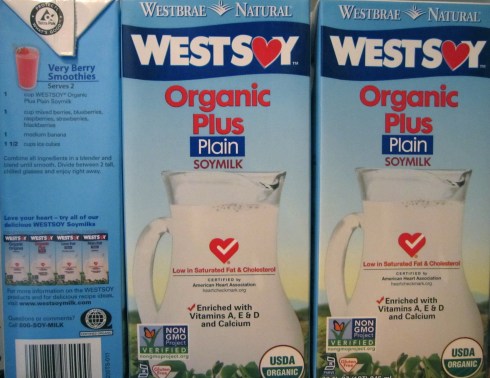
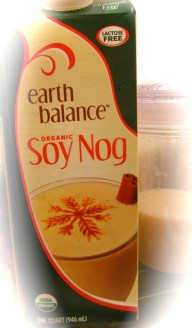
Holiday flavors (YUM!) – Pumpkin Spice, Chocolate Peppermint, Nog


Make your “own” milk: it’s easy to do and you needn’t endure a long pregnancy and painful delivery. It’s also less expensive than packaged milk and more eco-friendly. Personally, I don’t like the aftertaste of packaged almond milks but I love homemade almond milk. I encourage you to make your own nut and rice milks. Here’s how I do it…
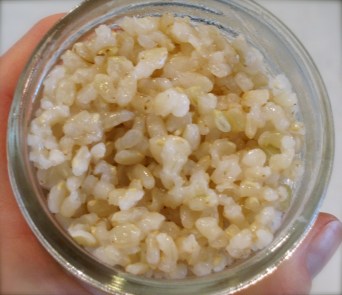
First, make sure you have a batch of cooked short grain brown rice on hand. I make up a batch and freeze portions in 1/2 cup glass jam jars. One cup (dried) rice will make enough for 7 batches of milk.
You must use short grain rice! You don’t want your milk to have a gritty sediment, do you? What’s the difference between long and short grains? The answer is in the percentage of the starches amylose and amylopectin. (I first learned about them from chef Alton Brown…thanks, A.B.!)
Long grain rice has a higher percentage of amylose. Amylose makes the rice cook up dry, firm and separate. Amylose is insoluble in water. Rice milk made from long grains has more of a “gritty” sediment. The resulting milk is more watery, less creamy = not good!
Short grain rice has a higher percentage of amylopectin. It releases starch when cooking, resulting in a moist, soft and sticky grain. The resulting milk will be creamy without a gritty sediment = good!
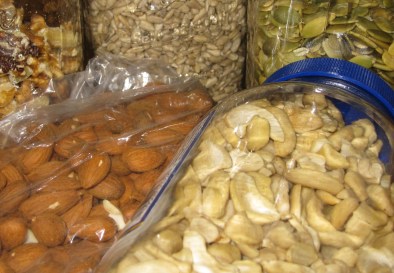
On to the nuts…pick your favorite raw nut. I like to use Brazil nuts, but sometimes I mix it up and use cashews, almonds, or hazelnuts.
Nut Rice Milk (my own creation):
Soak 1/3 cup raw nuts and 2 pitted dates into 4 cups water for 4-8 hours. Blend the water, nuts and dates with 1/2 cup cooked short grain rice and 1 teaspoon vanilla extract in a VitaMix blender or other “sporty” blender. (I don’t know if it would work with a wimpy blender!) Frothy, healthy, affordable and delicious! I don’t strain my milk. I simply shake, then pour.
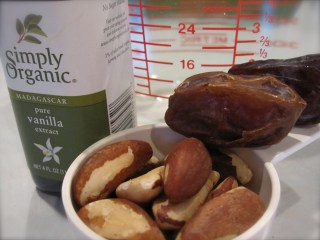
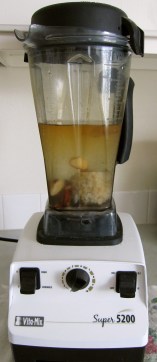

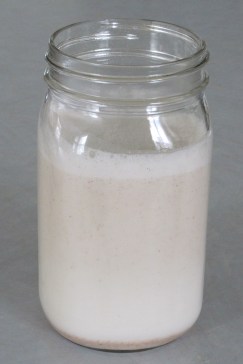
My personal favorite is mixing my homemade nut rice milk with packaged soy milk in a 50-50 ratio. That’s just me! You do what you gotta do…as long as you leave the animals alone!



 Freeheel Vegan