
You are currently browsing the tag archive for the ‘animal’ tag.
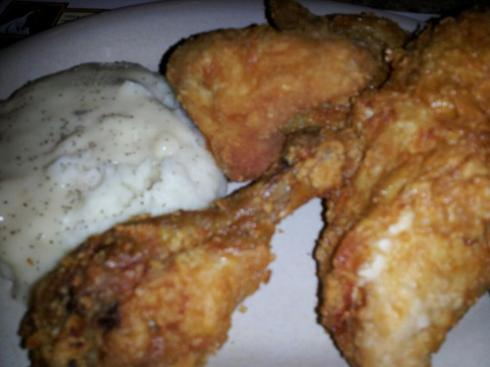
October 16– “Enjoying the BEST chicken dinner — at Mrs. Knott’s Chicken Dinner Restaurant.”
October 16– “Back for lunch, an amazing Cuban pork sandwich with homemade chips, so good — at Porto’s Bakery.”
October 15– “Onion loaf — at Tony Roma’s Ribs, Seafood & Steak.”
October 13– “Filet mignon with crab cakes. All gone.”
October 12– “Enjoying desserts — at Porto’s Bakery and Cafe in Burbank,CA.”
I’m just picturing what those poor tortured birds went through…
The response I got was this:
“Elisa, we get it. You don’t eat meat. Please keep your negativity to your own page. You are not going to change anyones mind.”
My second comment:
My “negativity” is simply the truth. Those birds were tortured for your meal…no doubt about it. Yes, you’re absolutely correct– I won’t change any minds that are closed to empathy and compassion. And yet– I have changed minds. Those people have told me so.
R.W.P’s next response was to “unfriend” me.
————————
I’m going to expand on my original response here, now that I’ve had the chance to reflect for a while. Here are some questions and comments that come to mind.
- No, I don’t think R.W.P does “get it” at all. If he truly got “it,” then he wouldn’t be eating animals either.
- “It” is not about me. ”It” is not about what I eat. ”It” is about empathizing with other living beings and acting with compassion.
- What is the “we” all about? ”Elisa, we get it.” Is R.W.P attempting to speak for all of my non-vegan Facebook friends? Instead of the dialogue staying between us, is he recruiting his own imaginary crew of backers so that he can feel more supported in his animal consumption? As if animal consumers aren’t already in the majority? (Yet– in that one Facebook moment, there was just 1 animal advocate and 1 animal consumer.)
- Take notice of what R.W.P didn’t say. He didn’t say, “No, Elisa, you’re wrong. Those birds weren’t tortured.” Think about that.
- Did I spoil some of R.W.P’s palate pleasure with my negative truth telling? Did I temper his Facebooking enthusiasm by exposing the experience of the chicken underneath the breading? For even just a few seconds– did I force R.W.P to also picture what those poor tortured birds went through?
- I’m not going to change ANYone‘s mind? Not even one? What a horrible world to imagine
- I’m not going to change anyone’s minds about what? (“What” could mean just about anything.)
- Finally…
I’m noticing a pattern on Facebook. ”Keep it on your Facebook page.” R.W.P isn’t the first FB friend to type that, and he certainly won’t be the last. But, I’ve figured out one thing with certainty through this latest Facebook experience:
As long as my “voice” on behalf of animals stays on my Facebook page, then no one else has to “listen.” Close-minded people can just scroll down the page. Pretend not to see. Refuse to look. Deny.
On the other hand, when I comment on a friend’s Facebook page, it’s different. My voice, the animal’s voice, can no longer be ignored. The ugly, violent, bloody, negative (!) reality demands acknowledgement, whether the friend on the receiving end makes a written comment about it or not.
The “problem” for some people is that they’re suddenly forced to take some of the personal responsibility that they’d been avoiding. They can no longer pretend that they aren’t an active participant in the violence. They can no longer pass the buck. The buck just stopped with them. It’s threatening.
What might happen next? You get unfriended.
“Friends like these, huh, Gary?”
Bottom line: It’s not about me and it’s not about you. It’s about the bird. It’s about the living being. That piece of “chicken” belonged to an animal who cared about her own life. Please picture the kind of life that the chicken would have wanted. Please protect that life.

Bubba is a 13 year old Nubian wether (castrated male goat) who lives at New Moon Farm Goat Rescue & Sanctuary. Before coming to the rescue he was attacked by dogs, which injured his hind legs. He walks more slowly than the rest, but he still gets around. Bubba is too sweet for words. No one can resist his charm!
When I went vegan in August of 2008, I was compelled to also help “farm” animals in a direct, “hands-on” way. I was so fortunate to discover New Moon Farm right near my house. I think the animals benefit me more than I help them! I encourage everyone to get involved with your local animal sanctuary.
An Essay on Consistency…
Sooner or later, people who abstain from consuming animal products will listen to friends, acquaintances, or family members declare, “I only buy humane meat,” or “I only buy free-range eggs,” or “I only buy organic milk.” These are the actual words spoken.
“I only buy humane meat, etc” could be one person’s response to some horrific undercover video footage or another’s solution to factory farming. The health-conscious say this in the context of minimizing exposure to rBGH, E-Coli O157:H7 or BSE. Environmentalists might include the word “sustainable.” Followers of Michael Pollan make this statement in support of the family farmer.
When I hear “I only buy humane meat, etc,” I also hear the following unspoken messages: “Hey look, I’m doing something,” “I care about the animals, too,” and “I recognize there is a problem.” I would like to respond to both the spoken words and the unspoken messages.
“I only buy humane meat.” Really? So when you go out to restaurants, what do you order? What kind of pizza do you get? On the road, do you occasionally opt for the convenience of a fast-food restaurant drive-through? In the grocery store, what choices do you make when buying canned soups or frozen entrees? Do you always check labels?
“I only buy free-range eggs.” “I only buy organic milk.” Ok. When you go out for breakfast, what do you have? Do you ever get a pastry at the coffee shop? Do you ask your barista about the milk in your espresso? How about an ice cream cone on a summer day? What about the cheese in your sandwich, taco, or salad? Grocery shelves are lined with baked, packaged, and processed foods containing egg and milk ingredients. Is what you buy free-range and organic? Are you that selective?
These are the types of questions that come to my mind when I hear someone say, “I only buy humane meat, etc.” My first reaction is, “I’m not sure about that.” Chances are, you don’t only buy humane meat, etc. If you truly did, you would be reading labels, asking questions about ingredients, and eating like vegans do nearly all of the time because the vast majority of animal-derived foods do not proclaim to be “humane,” “free-range,” “organic,” ‘”sustainable,” or “grass-fed.”
“But,” you say, “I didn’t mean EVERYTHING I buy is humane/free-range/organic/etc.” Exactly. My point is that consistency is lost. Being true to your own word is meaningless. Whether you say you “only buy humane meat” because of the animal cruelty videos, the factory farms, your health, the environment, the family farmers or some other reason, please take a critical look at whether you are actually doing it. If you say you do something, then do it consistently.
My second reaction when I hear “I only buy humane meat, etc” is, “So, what?” What do labels like “humane,” “free-range,” “organic” (as applied to meat and milk), and “sustainable” really mean? Do you know? Do you want to know? What do you think they mean? What are you hoping they mean? Why do you care?
The first answer to the question “What do the labels mean?” is “Not much.” The second answer is, “It doesn’t matter.” “Humane” doesn’t matter because unnecessary killing can’t be humane. “Free-range” doesn’t matter because it’s still slavery. “Organic milk” doesn’t matter because cow’s milk belongs to baby cows, not humans. “Grass-fed” doesn’t matter because grass is what the cows would be eating if we would just leave them alone in the first place.
None of these labels matter to me. Animals should not be the property of humans. Animals are not things, they are sentient beings. Animals belong to themselves. They deserve the basic right to live their own lives. The problem is not “how” we use animals, the problem is “that” we use animals.
When you say “I only eat humane meat, etc,” is that really what you do? Is that really what you want to do? Or, are you actually just saying, “Hey look, I’m doing something,” or “I care about the animals, too,” or “I recognize there is a problem.”? If you indeed want to do something, then act. If you do care about the animals, then really care. Go vegan. If you do recognize there is a problem, then don’t deny it. Learn more about it, take action, and be consistent.
In closing, being consistent does not make you “radical” or “extreme,” although people who abstain from consuming all animal products are often called these things. Acting consistently on principle simply shows integrity. Being consistent demonstrates conviction and the willingness to stand up for something that is important, no matter what. Consistency in action is necessary for positive change. Be consistent, yes. But please leave the animals alone.
I only buy humane meat. It is 100% plant-derived. It is humane meat.
(Picture taken while mountain biking in Roslyn, WA, Sept 24, 2011)
“Experience the Cabela’s Adventure Today” -Cabela’s website
A new Cabela’s store opened April 19, 2012 in Tulalip, Washington. “Hunting. Fishing. Outdoor Gear. World’s Foremost Outfitter.” Oh, joy. Exactly what the world needs more of: glorification of animal killing.
“Walk through the main door and look up to see two mounted Orcas chasing a school of Chinook.” -HeraldNet
Since opening day, the parking lot’s been constantly packed. I know this because I drive past the place every time I drive to and from work. (Between the Tulalip Tribe Resort/Casino, the new Cabela’s and the adjacent Seattle Premium Outlets (outlet mall), there is no evidence that I can see of our “down economy.” But, I digress.)
“Displays will feature 200 animal mounts, including bears, elk, grouse and otters.” -HeraldNet
There is a banner displayed on the outside of the store: “Personal Defense & Home Protection.”
Let me see if I’ve got this straight: You’re the quintessential Cabela’s customer. You enter the store to buy items that are specifically designed to– track, sight, call, bait, lure, decoy, catch, shoot, target, kill, gut, skin, butcher, season, cure, brine, grill, dehydrate, smoke, grind, slice, and vacuum seal– living, breathing, sentient animals who are simply minding their own business, trying to survive and thrive. Right so far?
You– Mr. Average Joe Hunter & Mr Average Bob Fisherman– go out in nature with all of your Cabela’s “goods” with the hope that something– someone– will die at your hands. If the purchased items fulfill their intended purposes, then lives will be taken.
You want to take the life of an animal. It’s not your life, it’s his life (or hers). But you want it for yourself. His body belongs to him, but you don’t care. You feel entitled to it. You don’t consider his needs, only your own wants. You don’t empathize with the animal, despite the fact that he will fight to survive in whatever situation becomes threatening to him.
How ironic that…
When you navigate the world, you want to remain comfortable. You seek contentment. You know that your life is your own. Your body belongs to you. You withdraw from pain. You don’t want to be hurt, and you don’t want to be killed. You will defend yourself against threats to your safety and the safety of your family. Maintain “PERSONAL DEFENSE.”
When you come home, you expect that your shelter will be undisturbed. You don’t want others to take that which does not belong to them. You assume that your belongings are secure because “what’s yours is yours.” Maintain “HOME PROTECTION.”
Sorry, I don’t get it.
You want to take the life of another, but you don’t want to have the same circumstance visited upon yourself? It makes no sense to me whatsoever. Can’t you see the contradiction? Can’t you choose to live in a better way? If you think you have the courage to do so, then I can help show you how. Let me help you.
“This is freaking impressive,” said Tyler Schmidt, a 16-year-old from Arlington making his first visit to a Cabela’s store. “When I die, this is where I want to go.” -Marysville Globe
I like this comedy bit from Ellen Degeneres about hunting:
http://www.youtube.com/watch?v=8DB4KtOmFok
http://www.heraldnet.com/article/20120328/BIZ/703289893
http://www.heraldnet.com/article/20120412/SPORTS/704129877
http://www.marysvilleglobe.com/business/148172445.html
http://www.cabelas.com/browse.cmd?categoryId=112426380#feature
Milk a bean, milk a grain, milk a nut, milk a seed, milk a drupe (yes, a drupe!), but please don’t milk an animal. When people consume milk from lactating animals, the first thing you should ponder is what is baby cow– baby goat– baby sheep– drinking? What happens to the baby animals? What happens to momma cow– momma goat– momma sheep when her overworked reproductive system stops being “profitable”? The bad news is that the answers aren’t pretty.
The good news is that non-dairy milk options are plentiful. It’s easier than you might think to wean off animal milk. There is no nutritional need for animal milk in the human diet!
Go to the non-dairy milk section of your local store and you’ll notice an ever-increasing array of plant milks: Soy milk, rice milk, oat milk, almond milk, hazelnut milk, hemp milk, coconut milk..even flax milk! There are different brands of each type of milk. There are different varieties within the types of plant milks..like plain, vanilla, chocolate, unsweetened, fortified. If you don’t like one, try another. Find your favorite!
Holiday flavors (YUM!) – Pumpkin Spice, Chocolate Peppermint, Nog
Make your “own” milk: it’s easy to do and you needn’t endure a long pregnancy and painful delivery. It’s also less expensive than packaged milk and more eco-friendly. Personally, I don’t like the aftertaste of packaged almond milks but I love homemade almond milk. I encourage you to make your own nut and rice milks. Here’s how I do it…
First, make sure you have a batch of cooked short grain brown rice on hand. I make up a batch and freeze portions in 1/2 cup glass jam jars. One cup (dried) rice will make enough for 7 batches of milk.
You must use short grain rice! You don’t want your milk to have a gritty sediment, do you? What’s the difference between long and short grains? The answer is in the percentage of the starches amylose and amylopectin. (I first learned about them from chef Alton Brown…thanks, A.B.!)
Long grain rice has a higher percentage of amylose. Amylose makes the rice cook up dry, firm and separate. Amylose is insoluble in water. Rice milk made from long grains has more of a “gritty” sediment. The resulting milk is more watery, less creamy = not good!
Short grain rice has a higher percentage of amylopectin. It releases starch when cooking, resulting in a moist, soft and sticky grain. The resulting milk will be creamy without a gritty sediment = good!
On to the nuts…pick your favorite raw nut. I like to use Brazil nuts, but sometimes I mix it up and use cashews, almonds, or hazelnuts.
Nut Rice Milk (my own creation):
Soak 1/3 cup raw nuts and 2 pitted dates into 4 cups water for 4-8 hours. Blend the water, nuts and dates with 1/2 cup cooked short grain rice and 1 teaspoon vanilla extract in a VitaMix blender or other “sporty” blender. (I don’t know if it would work with a wimpy blender!) Frothy, healthy, affordable and delicious! I don’t strain my milk. I simply shake, then pour.
My personal favorite is mixing my homemade nut rice milk with packaged soy milk in a 50-50 ratio. That’s just me! You do what you gotta do…as long as you leave the animals alone!


The High Cost of Pork
July 26, 2012 in MeatCast Commentaries | Tags: animal, food companies, gestation stall, group, hog farmer, National Pork Producers Council, NPPC, open housing, operation, pen, pigs, R.C. Hunt, sows, supply chain, Vegan | Leave a comment
Check out this 6/06/12 article from the “Newsroom” of the National Pork Producers Council (NPPC):
“Survey Shows Few Sows in Open Housing.”
NPPC is the “global voice for the U.S. pork industry, protecting the livelihoods of America’s 67,000 pork producers.”
Survey says…
The survey included pork operations of 1000 or more sows. Responses were received from 70 operations, equaling 3.6 million of the nation’s 5.7 million sows.
Here is the breakdown– by size of operation– of the percentage of sows who live in “open” pens for some portion of gestation:
It seems that the NPPC is “concerned” about “recent pronouncements by food companies that they will use only pork from operations that are gestation-stall free.”
Here are the words from NPPC President R.C. Hunt, a pork producer from Wilson, N.C.:
“Today’s survey shows that these food companies obviously haven’t thought through the complexities, logistics or implications of their requests. Simply making an announcement without understanding the entire supply chain’s ability to meet these requests or the challenges involved is utterly befuddling.
“Given that few sows always are in open housing and that producers may use both individual and group housing, it would be extremely difficult and costly for the pork supply chain to sort, segregate and trace product to meet the requirements of these food companies.”
“Regardless, this issue is about giving animals the best care possible, and hog farmers like me know through years of experience that individual housing provides that best care.”
—————-
Dear Mr. Hunt,
Indeed, I do share your concern about food companies “only” using pork from operations that are gestation-stall free.
I feel your pain.No, I feel the pigs’ pain. My concern is with food companies using pork from any animal killing operation.
So you want to discuss complexities, logistics, implications and challenges, Mr. Hunt? Fine…
Yes, I find it extremely difficult to comprehend how cutting up young pigs can be the end result of giving them the best care possible. I’m utterly befuddled.
So you want to discuss costs?
Pork is infinitely costly to each and every individual pig who is killed unnecessarily. (Pigs are 100% unnecessary in the human diet.)
Yes, Mr. Hunt- the costs are way too high. Why don’t you treat this time of increasing pressure as a time of opportunity? This is the perfect time for you and other producers to get out of the pig exploitation industry.
Help meet the demand for healthy, organic, non-GMO vegan foods: fruits, vegetables, beans/legumes, nuts/seeds and whole grains.
In your own words: Regardless, this issue is about giving animals the best care possible.
Animal killing cannot coexist with animal care. Sentient beings deserve moral consideration. Animals have their own interests. We need to stop exploiting the lives of others.
Go VEGAN.
(The image is a screenshot of this HSUS video. For another related blog post, see Animal Care Experts.)
Share this:
Like this: